Rigetti reports 99.5% median two-qubit fidelity on its 108-qubit system and $1.4 million Q3 revenue
Short answer: Rigetti Computing says its Cepheus-1-108Q system reached 99.5% median two-qubit gate fidelity across 108 qubits, meeting a milestone it had set for the machine. In the same third-quarter results release on 11 November, the company reported revenue of $1.4 million and set a new target of a 300-plus-qubit system by mid-2028.
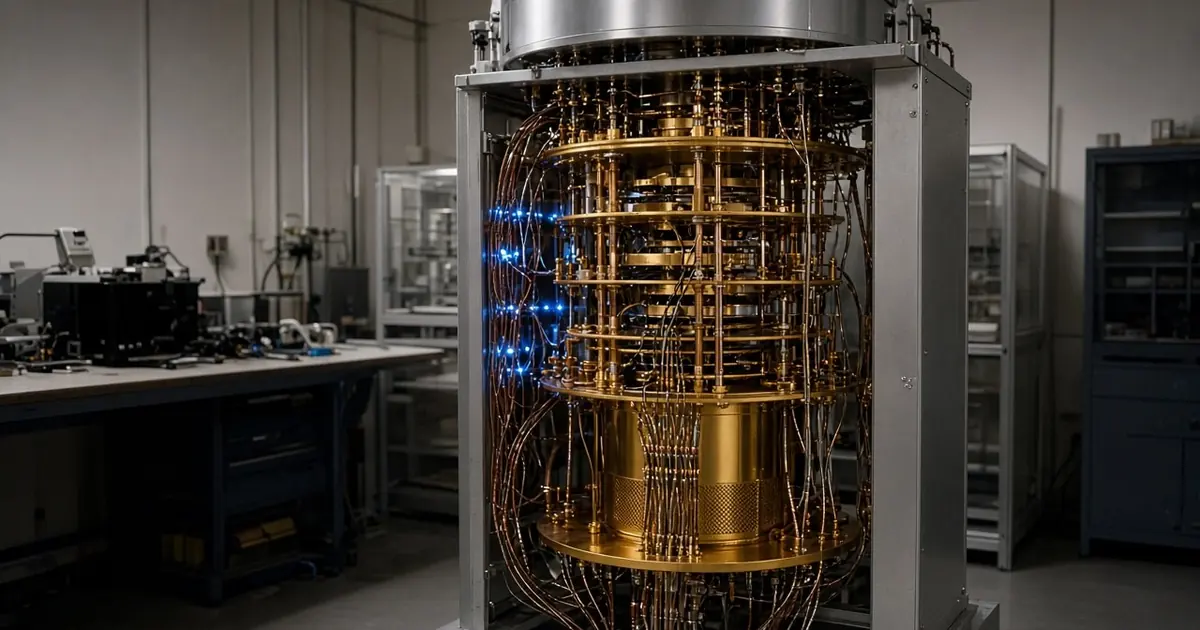
The fidelity figure matters because Cepheus-1-108Q is built from 12 interconnected nine-qubit chiplets, and Rigetti has argued that chiplets are a practical way to scale superconducting processors. According to the release, carried in full by The Quantum Insider, the system also reached 99.6% median two-qubit fidelity on an 80-qubit sublattice and 99.7% on a 50-qubit sublattice. Rigetti credits work across chip design, materials, manufacturing, calibration and system engineering.
The numbers
Rigetti reported a third-quarter operating loss of $33.2 million and a GAAP net loss of $3.1 million, with a non-GAAP net loss of $20.5 million. Revenue for the first nine months of 2026 was $10.9 million, up about 110% from $5.2 million a year earlier. The company ended September with $497.1 million in cash, cash equivalents and available-for-sale investments, and no debt. It expects full-year 2026 revenue of about $20 million, assuming customer acceptance by C-DAC and the related revenue recognition in the fourth quarter.
Chief executive Subodh Kulkarni also pointed to a definitive $100 million agreement with the U.S. Department of Commerce, signed during the quarter.
Roadmap
The next system target is more than 300 qubits with about 99.7% median two-qubit fidelity and gate speeds below 60 nanoseconds by mid-2028, with more qubits per chiplet, faster readout and more cryogenic capacity. Rigetti still aims for roughly 1,000 qubits at about 99.9% fidelity and gate speeds below 50 nanoseconds within about three years, and says it plans to pack more qubits into a single dilution refrigerator rather than network several together.
Rigetti says its gates run in 50 to 70 nanoseconds. Its claim that this is about 10,000 times faster than trapped-ion systems is the company's own comparison.